
Pages
Search the website
Jobs
Companies
Events
Everyone brings something to the table
Dutch workplaces can feel refreshingly informal, but it can also be confusing. From flat hierarchies and blunt honesty to short lunch breaks and firm boundaries between work and life, the rules aren’t always written down. International colleagues bring their own experiences, perspectives and ideas. Understanding both sides can make working together better for everyone. So, pull up a chair. Let’s talk about what happens when different ways of working meet.


Life in the office
One thing that rivals the flatness of the Dutch landscape is the flatness of the hierarchy within Dutch companies.
For internationals, that can feel like walking a tightrope: professional, but not overly formal. Years of conditioning taught you to address your university lecturer by the correct title, just to avoid mistakenly implying you’re best friends. Now you’ll be emailing your managers with: “Hey Floor and Willem, here’s the latest update.”
While all this is being processed in a newcomer’s head, for the average Dutch colleague it’s just another Monday. They’re expertly navigating a system where a good idea outranks a fancy title, no matter how long you’ve had it.
Did you know...
that most workplace misunderstandings aren't about personality, but culture? Dutch psychologist Geert Hofstede researched cultural values across different countries and found that where you grew up shapes how you lead, listen, disagree, and even how long you stay at the office. What feels "direct" to one person feels "rude" to another. What looks like "initiative" in one culture reads as "disrespectful" in another. The good news? Once you see the pattern, it all starts to make sense.
Meetings, meetings, meetings
Don’t mistake informality for a lack of structure. Dutch workplaces may be relaxed about titles, but they tend to be much less relaxed about calendars. Meetings are scheduled, appointments are made, processes have protocols and, if something starts at 10:00, being on time or five minutes early gives the right impression.
That can feel like a contradiction at first: the person running the meeting might be sitting opposite you in jeans, coffee in hand, while still expecting everyone to arrive on time, know why they’re there and contribute to a clearly defined agenda. The hierarchy may be flat, but the organisation around it often isn’t.
Tips for settling into a Dutch workplace
Learn (basic) Dutch
It may not be required for your role, but even a little can go a long way in building connections and understanding the workplace, e.g. in the canteen, reading your company’s intranet or in everyday conversations by the coffee machine.
Speak up
If you have questions or doubts about anything, simply ask. Dutch colleagues rely on you to proactively raise concers or questions. Same goes for meetings, you are expected to voice your opinion just like everyone else.
Don't take it personally
Dutch communication can feel direct and blunt. Keep in mind that feedback is usually about the work, not you. Emails may contain less fluff than you’re used to, but again, there is no reason behind it other than being to the point.
My Dutch colleagues asked me one day if I was sick, because I look terrible. I was in fact not sick. 😅
Žofia Research scientist originally from Slovakia

Broodje kaas, anyone?
It’s a cliché by now, but for the uninitiated: “lunch at the office” here often means a lunchbox containing a couple of slices of bread and cheese, eaten by the entire team at exactly the same time, every single day. The silver lining? You get free daily Dutch practice.
If you’ve grown accustomed to an hour-long lunch break, you may need to compromise a little to blend into Dutch office life.
You’ll have the opportunity to show off your gastronomic tastes when it’s your birthday and it’s your turn to bring treats for your colleagues. That’s trakteren for you!

Vrijmibo
Survive to Friday and you’ll likely hit “vrijmibo”, short for “vrijdagmiddagborrel,” or Friday-afternoon drinks. It’s become close to a national ritual, although with many people opting to work from home on Fridays, the tradition sometimes shifts to Thursdays.
Although the Friday afternoon drinks are actually intended to wrap up the work week, they are also often used for networking. This is especially true at large companies with multiple departments, so this can be a perfect opportunity to grow your network. Don‘t forget it is very standard to get a new position “via-via” in the Netherlands.
During weekends and holidays, my Dutch colleagues don’t expect anything from me, I get no messages or emails that would interrupt my free time. I really appreciate that boundary between work and personal time.
Sinem Teacher (originally from Turkey)
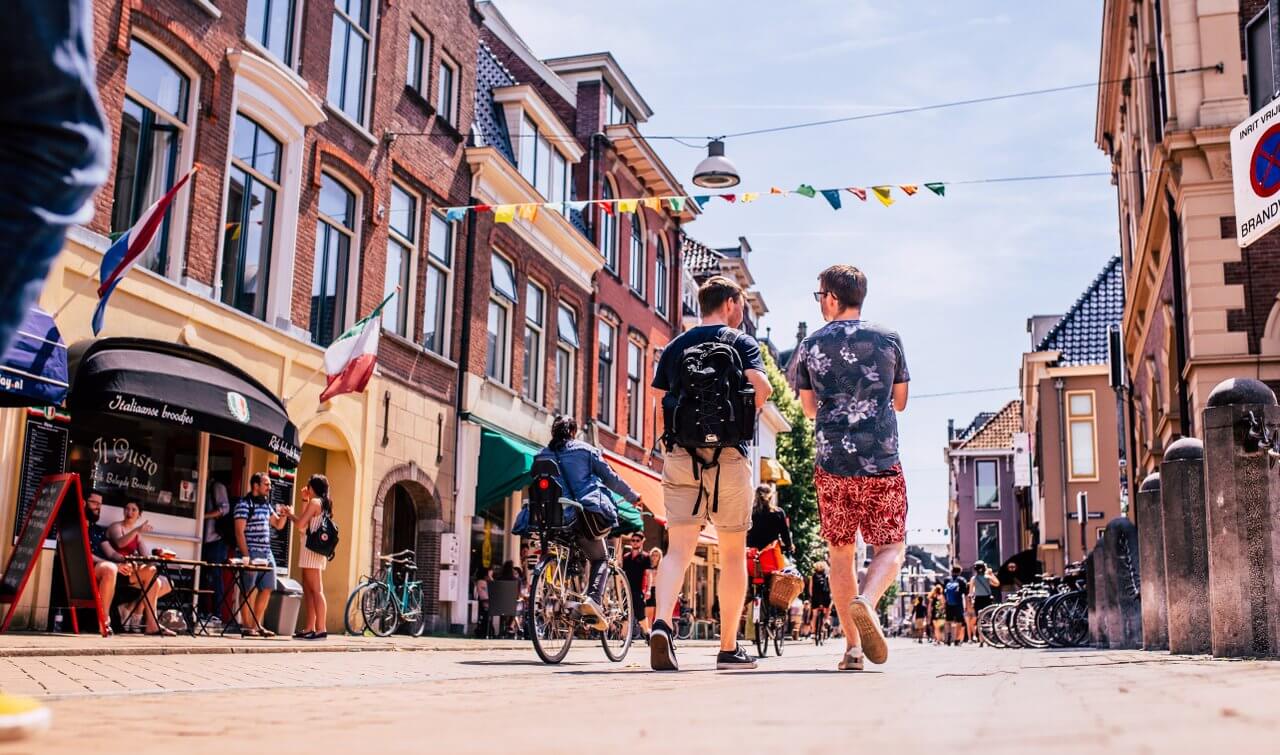
Work life balance Dutch way
In the Netherlands, work is generally seen as one part of life, not life itself. Employees are encouraged to take their holidays, leave work around the end of the working day and, for many, work a shorter week. Clear boundaries matter: you are trusted to do your job, but your personal time is your own. The culture also tends to favour a relaxed, “good enough” approach over perfectionism, with mistakes seen as opportunities to improve rather than failures.
Ready to grab a chair and join the table?


How to make room for different ways of working
Make expectations clear
Don’t assume everyone knows the unwritten rules. Explain how your team communicates, gives feedback and works together. Having a regular catch up moment especially in the beginning will help answer unforeseeable questions.
Be curious
A buddy can help international colleagues navigate the practical and social side of a new workplace and make it easier to ask the questions they might otherwise keep to themselves.
Buddy system at work
A buddy can help international colleagues navigate the practical and social side of a new workplace and make it easier to ask the questions they might otherwise keep to themselves.


