Pages
Search the website
Jobs
Companies
Events
Engineering Doctorate in Autonomous systems for aquatic plant detection and classification
Posted on
Are you an engineer eager to prototype real-world autonomous sensing systems—not just research them? Join the Engineering Doctorate (EngD) program in Autonomous Systems at the University of Groningen and help develop next-generation tools for invasive aquatic vegetation management in Dutch waterways. This two-year, post-master’s program combines advanced academic training with an intensive, industry-embedded R&D project alongside Harkboot.nl and the Kenniscentrum Ongewenste Wortelende Waterplanten (KOWW.nl). You’ll translate cutting-edge sensing research into a field-deployable engineering prototype, incorporating hyperspectral imaging, passive polarimetric sensing, and AI-based classification into UAV-based field workflows—directly supporting municipalities, water boards, and ecological agencies in meeting EU biodiversity and invasive species regulations.
What are you going to do?
You will design, prototype, and validate an automated system for detecting and mapping aquatic vegetation using multimodal sensor data collected from UAVs and surface platforms. Working in real canal environments characterized by turbidity shifts, wind-generated ripples, glint, and diverse plant morphologies, you will:
- Design and implement a multimodal sensing payload (HSI + polarimetry) on existing UAV platforms
- Conduct controlled lab experiments to characterize spectral-polarimetric traits of aquatic vegetation
- Deploy and optimize the system in Dutch canal field sites with operational partners
- Develop calibration, co-registration, and water-column compensation routines
- Build a supervised ML pipeline to classify invasive vegetation
- Produce geospatial output layers compatible with waterboard GIS infrastructures
- Translate requirements from ecological, municipal, and industrial stakeholders into engineering specifications
- Perform structured verification and validation following the systems engineering V-model
Rather than pursuing purely fundamental research, this EngD emphasizes iterative prototyping, verification and validation, traceable requirements, and translation of sensor outputs into actionable stakeholder insights. Field deployment under real conditions is a core component of your work.
Who are you?
You are an ideal EngD candidate with:
- A completed MSc degree in a relevant engineering or scientific discipline (e.g., Autonomous Systems, Robotics, Remote Sensing and GIS, Computer Science, Geomatics, Environmental Instrumentation, Applied AI, or equivalent)
- Practical experience with autonomous sensing systems, such as UAV payload integration, imaging instrumentation, or remote sensing data collection beyond coursework
- Demonstrated proficiency in machine learning and computer vision, including training, testing, and evaluating models on noisy, real-world datasets
- Strong programming skills for implementing calibration routines, data fusion, and feature-based classification pipelines
- Field experimentation experience, including calibration and ground-truth acquisition under variable environmental conditions
- A systems engineering mindset, evidenced by requirements interpretation, iterative prototyping, structured documentation, and validation against stakeholder needs
- Initiative in coordinating small collaborative activities (e.g., stakeholder meetings, knowledge-exchange workshops) and contributing to early-stage project proposal development
- An interest in exploratory sensing strategies and out-of-the-box problem-solving, essential given the complex nature of this challenge
You thrive in complex, multi-stakeholder environments where ecological impact, algorithmic accuracy, and field robustness all matter.
What can you expect from us?
- In accordance with the collective labor agreement for Dutch universities, we offer a salary of at least € 3.029 up to a maximum of € 3.029 (TOIO) gross per month for a full-time employment contract.
- 232 vacation hours per year, based on a 38-hour workweek (1.0 FTE). You can also work more or fewer hours in exchange for more or fewer free hours. For example, with a 40-hour workweek, you save 96 extra free hours, and with a 36-hour workweek, you lose 96 hours.
- End-of-year bonus of 8.3% and 8% holiday allowance.
- Extensive opportunities for personal and professional development.
- First, you will get a temporary 1.0 FTE position for one year with the option of renewal for another year; the contract’s extension is contingent on sufficient progress in the first year.
Where will you be working?
At the University of Groningen (RUG), researchers across all branches of science and technology work on scientific challenges and societal issues. Lecturers train their students for meaningful careers in science or beyond. Interdisciplinary research and education, knowledge sharing, and collaboration with companies, government institutions, and societal organizations are highly valued at this top 100 university. RUG aims to be an open academic community with an inclusive and safe working environment that invites you to contribute your value.
The Faculty of Science and Engineering (FSE) provides teaching and research across a wide range of disciplines, from physics and biology to artificial intelligence, mechanical engineering, and pharmacy. In close collaboration with partners from industry, healthcare, and society, we contribute to the urgent challenges of our time, such as energy, sustainability, digitization, and medical technology. Our community is open and informal, with more than 7,000 students, 1,000 PhD students, and 1,400 staff members from all over the world. If you would like to learn more about the Faculty of Science and Engineering, visit rug.nl/fse.
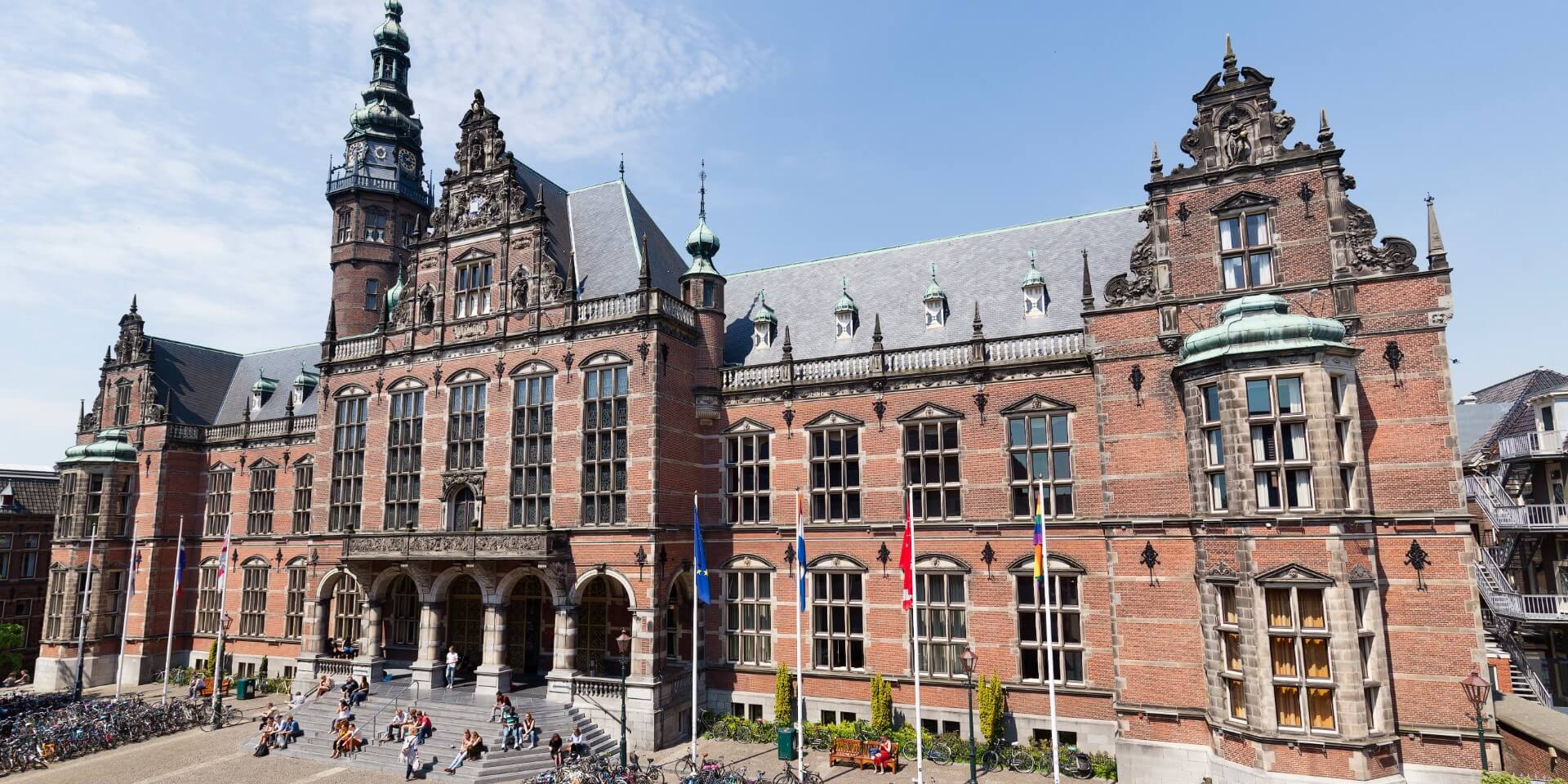
You’ll work within a collaborative partnership between three organizations addressing a critical environmental challenge. The University of Groningen, founded in 1614 and globally renowned for its exceptional education and research, hosts around 34,000 students and researchers in a dynamic environment for academic growth. As one of Europe’s leading research institutions, it maintains its position as a hub for innovation through collaboration with top universities worldwide. Located in the vibrant city of Groningen in northern Netherlands, it attracts talent from across the globe.
Harkboot.nl is a Dutch company focusing on innovative solutions for managing invasive aquatic plants. They combine ecological management strategies with advanced inventory techniques and integrate cutting-edge technologies such as sensors and AI for enhanced detection, classification, and control. The company collaborates with KOWW.nl to support biodiversity and ecosystem balance in Dutch waterways. Harkboot’s established “hark-method” (root removal) offers highly effective ecological control, and your work will enable optimal deployment through earlier, more precise detection.
In your first year, you’ll receive comprehensive training in systems engineering, covering mechanical engineering, computer science, artificial intelligence, and specialized topics like cyber-physical systems, robotics, and nonlinear control systems, including a 10-week project module. In your second year, you’ll complete a one-year internship collaborating directly with Harkboot.nl and partners. The program also focuses on professional development, offering training in communication, project management, teamwork, and research methods, with opportunities to take advanced courses at the University of Groningen or 4TU.

Will you become our new Engineering Doctorate in Autonomous systems for aquatic plant detection and classification?
Apply at University of Groningen